


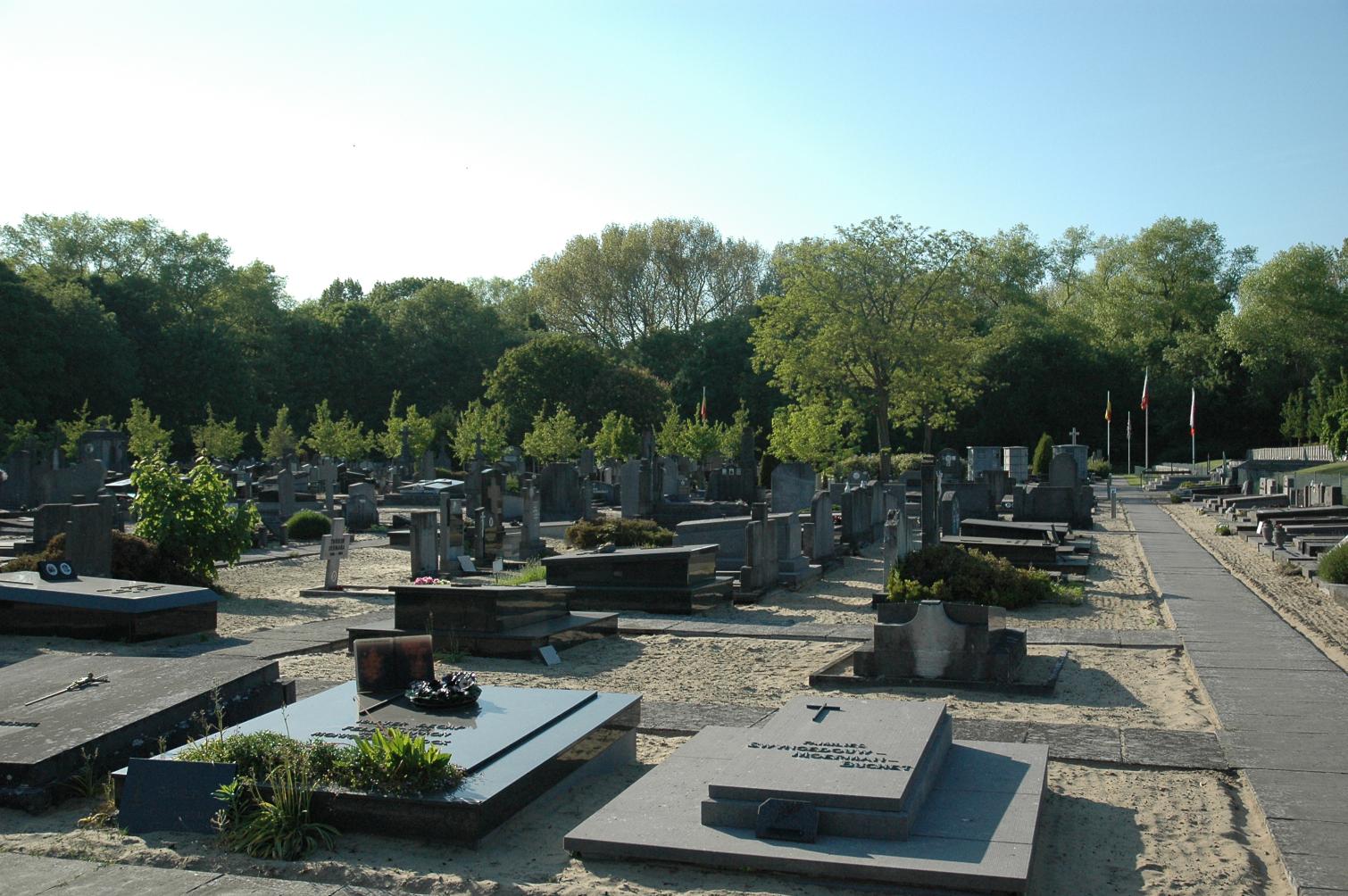
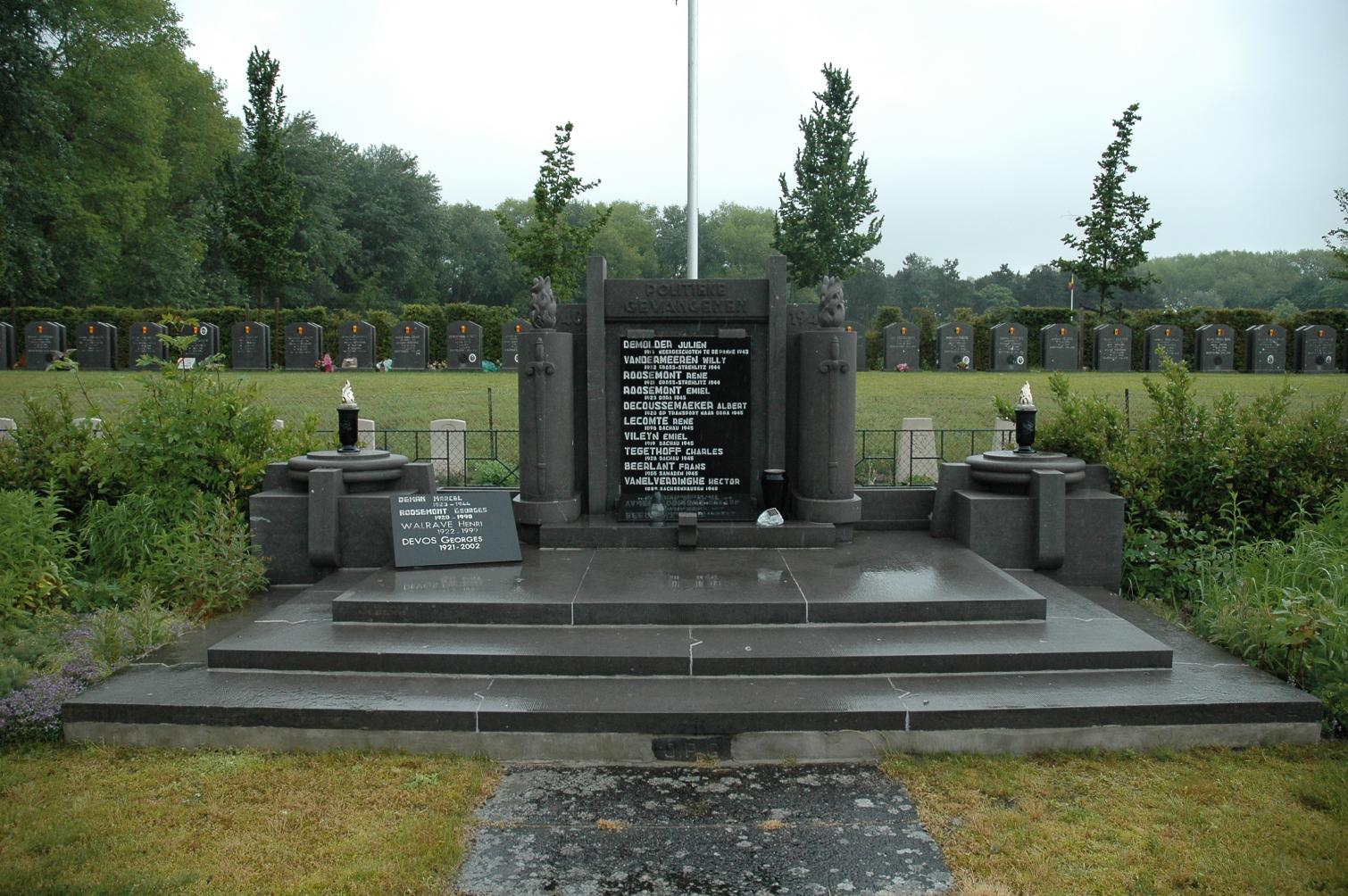
The monumental cemetery of De Panne consists of a military and a civilian section. It was built in 1918 in the middle of the dunes near ‘Moeder Lambik’ (Mother Lambik). The land belonged to the Calmeyn family and was expropriated by order of the Minister of National Defence. Both cemeteries were designed by architect Eugène Dhuicque, who worked at the front line during the war at the so-called Mission du Ministère des Sciences et des Arts.
Photo gallery


Cemetery
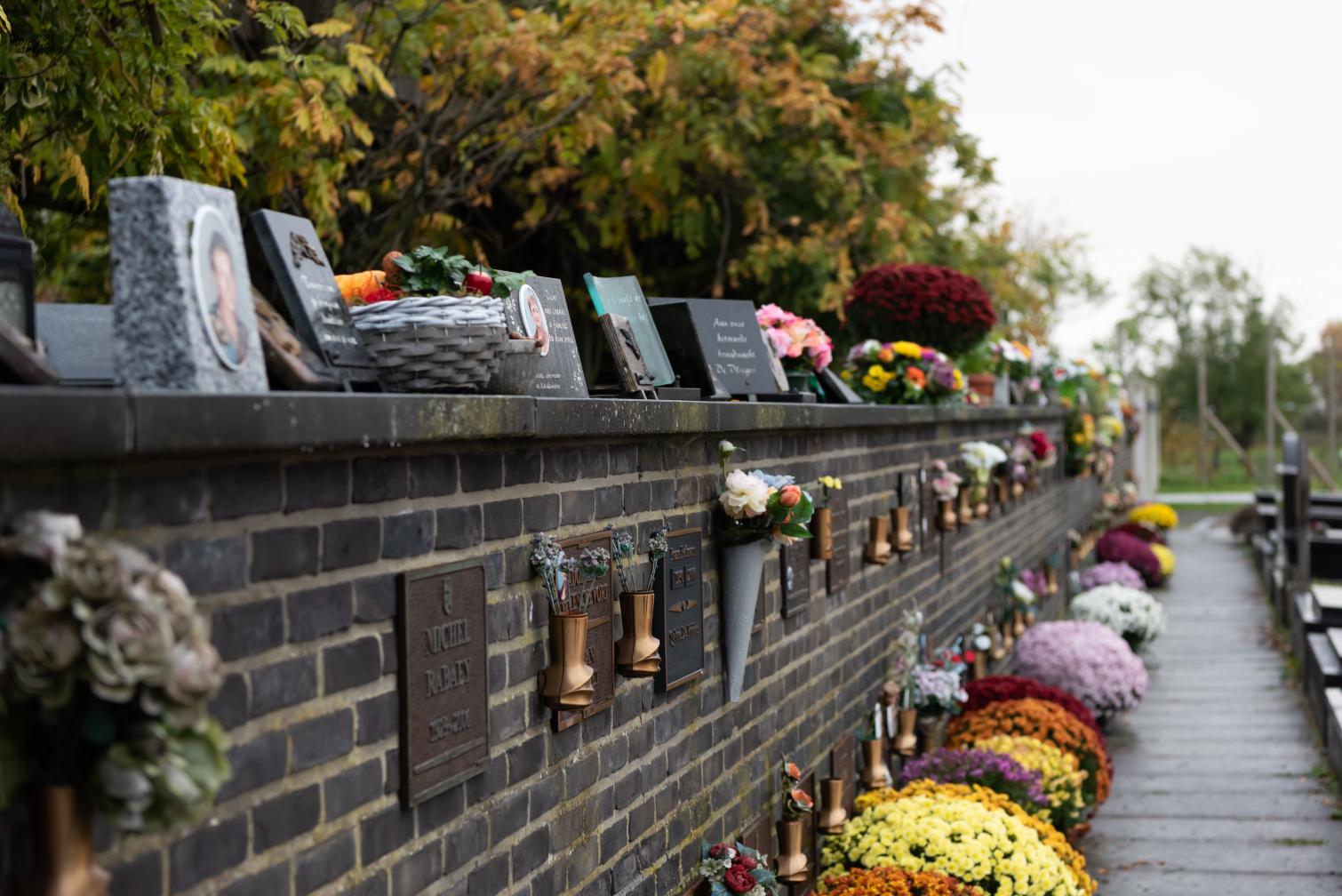
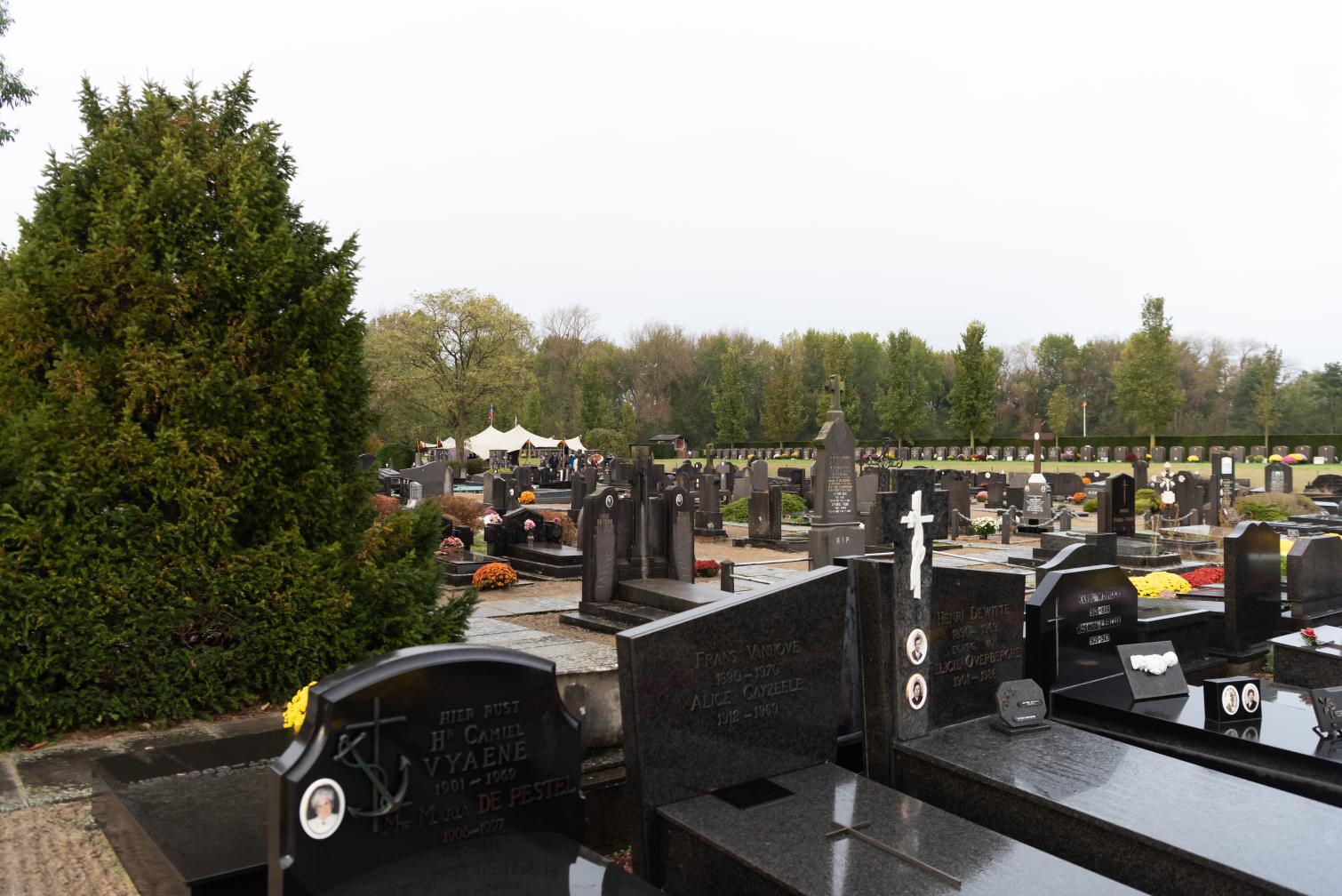
The civilian cemetery has lanes and roundabouts as well as secondary streets and paths. It is clear that there is an architectural urban development concept behind this. The cemetery contains both monumental gravestones and smaller monuments.
Our funerary heritage is a comprehensive form of cultural heritage that does not always attract the interest it deserves. However, the cemetery is also an exhibition, an open-air museum of sculptures.
Symbols
Many grave monuments contain specific symbols, such as objects, animals, plants or flowers. They reveal what the visitor blindly ignores.
The inverted torch: the extinguishing of the torch is used as a symbol of death. Two joined hands are the expression of love or friendship that is stronger than death and where death itself is experienced only as a temporary separation. The hourglass is an instrument to measure time and symbolises the brevity of life. Both the broken down column and the broken down tree symbolise the sudden breakdown of life. The meaning of the palm branch is victory over death. The ouroboros, the snake biting its own tail, is a symbol of eternity. An urn is a symbol of death and transience. The eternal rest of the dead is sometimes represented by a pillow or by three poppy balls. The anchor symbolises firm trust and the strength of faith. In other cases, it is a symbol on the grave of a deceased fisherman. An open book is the Bible, or the book of life, in which all the deeds and events of the life of the deceased are recorded as well as the lessons learned from that life. The burning oil lamp symbolises eternal light or the eternal memory of the dead.
In funerary art, more than in any other form of artistic expression, humans have tried to give shape to their deepest feelings and thoughts about death and the hereafter. Funeral monuments teach us that death is part of life and that in making them, humans expresses themselves just as in all other areas of their intellectual, cultural, social or sentimental life.
How to get there?
How much does it cost?
Great news, admission is free!
When is it open?
From sunrise to sunset
Is it accessible?
Yes, the paths are adapted so that you can pass through by wheelchair. There are also 2 wheelchairs you can borrow on site to get to a loved one's grave. #DePanneWithoutBorders
Contact us
