


The Belgian military cemetery of De Panne is adjacent to the civil cemetery, near the Oosthoek nature reserve and the Calmeynbos. It was built during World War I in the middle of the dunes on land owned by the Calmeyn family.
Photo gallery

Cemetery
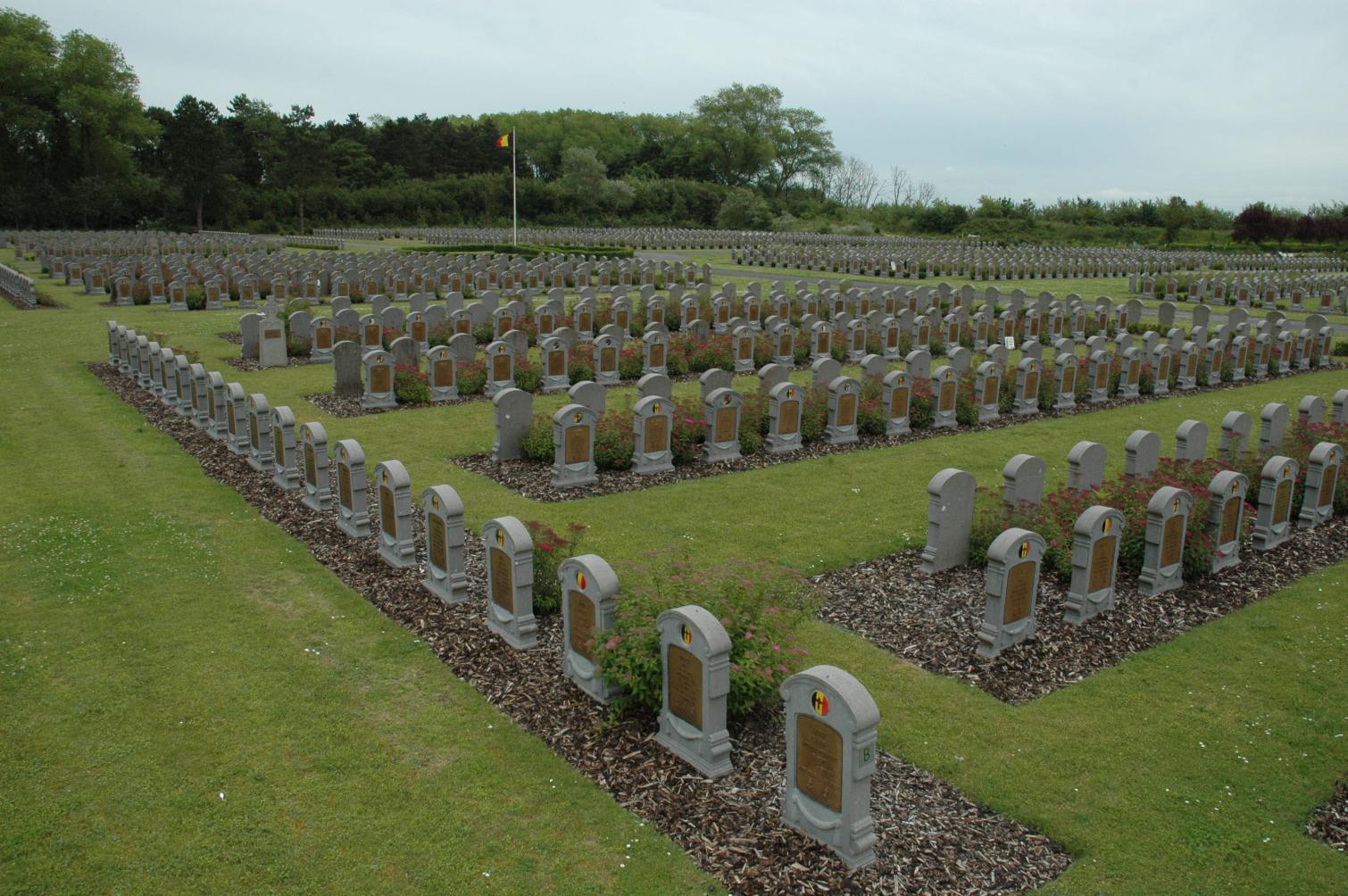
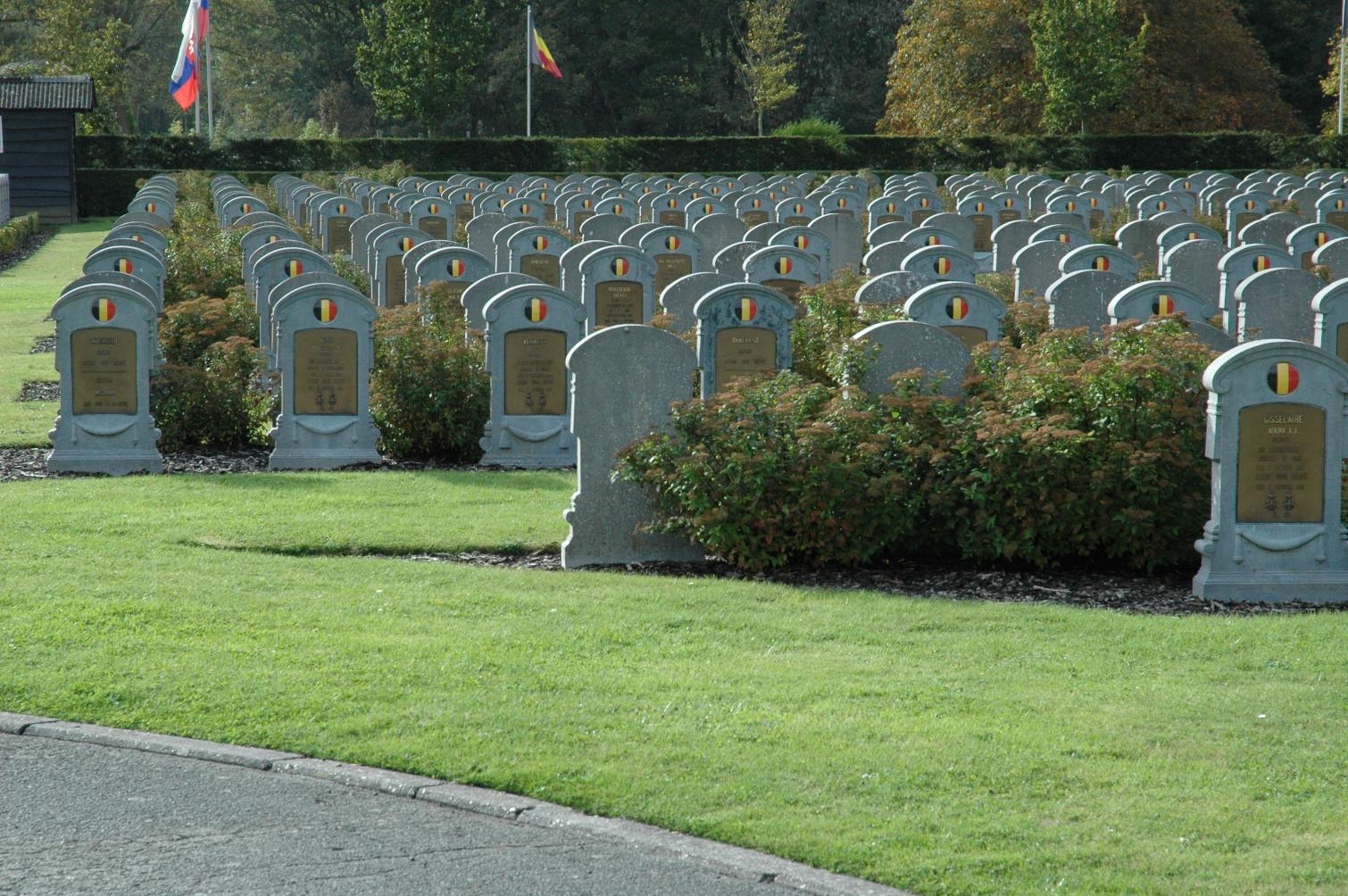
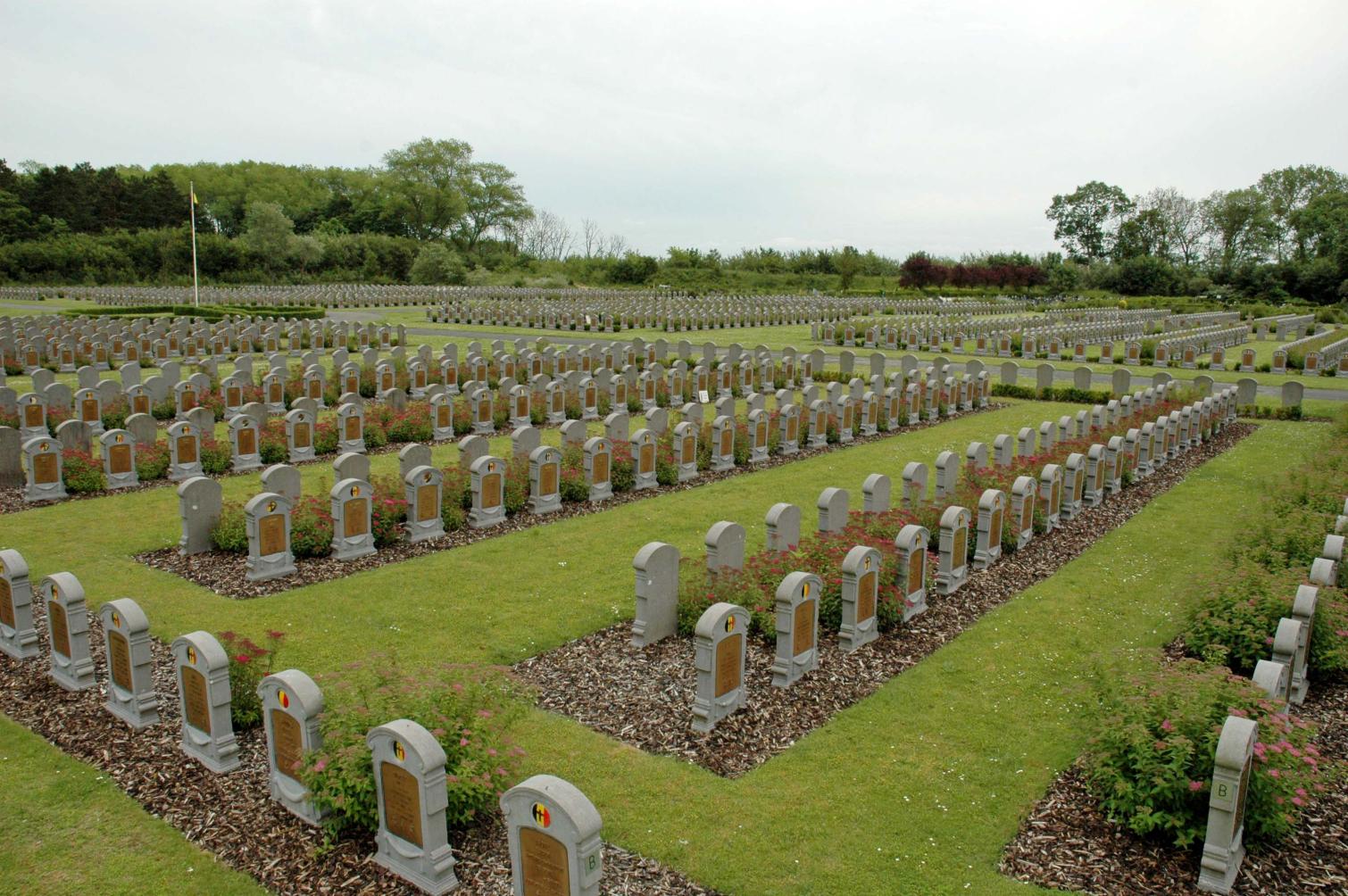
The cemetery is built on an area of 270 ares. The rectangular flowerbeds are laid out geometrically around a central flagpole: there are four large quarters, each subdivided into four flowerbeds indicated by a letter. The flowerbeds consist of grassy banks with mostly double rows of headstones, arranged back to back, with spiraea bushes planted in between.
At the beginning of WWI, the dead of De Panne were still buried in the cemetery of Adinkerke. A year after De Panne became an independent municipality in 1911, it had tried in vain to acquire land for its own cemetery. It was not until January 1918 that the present cemetery was established, with a military and a civilian section.
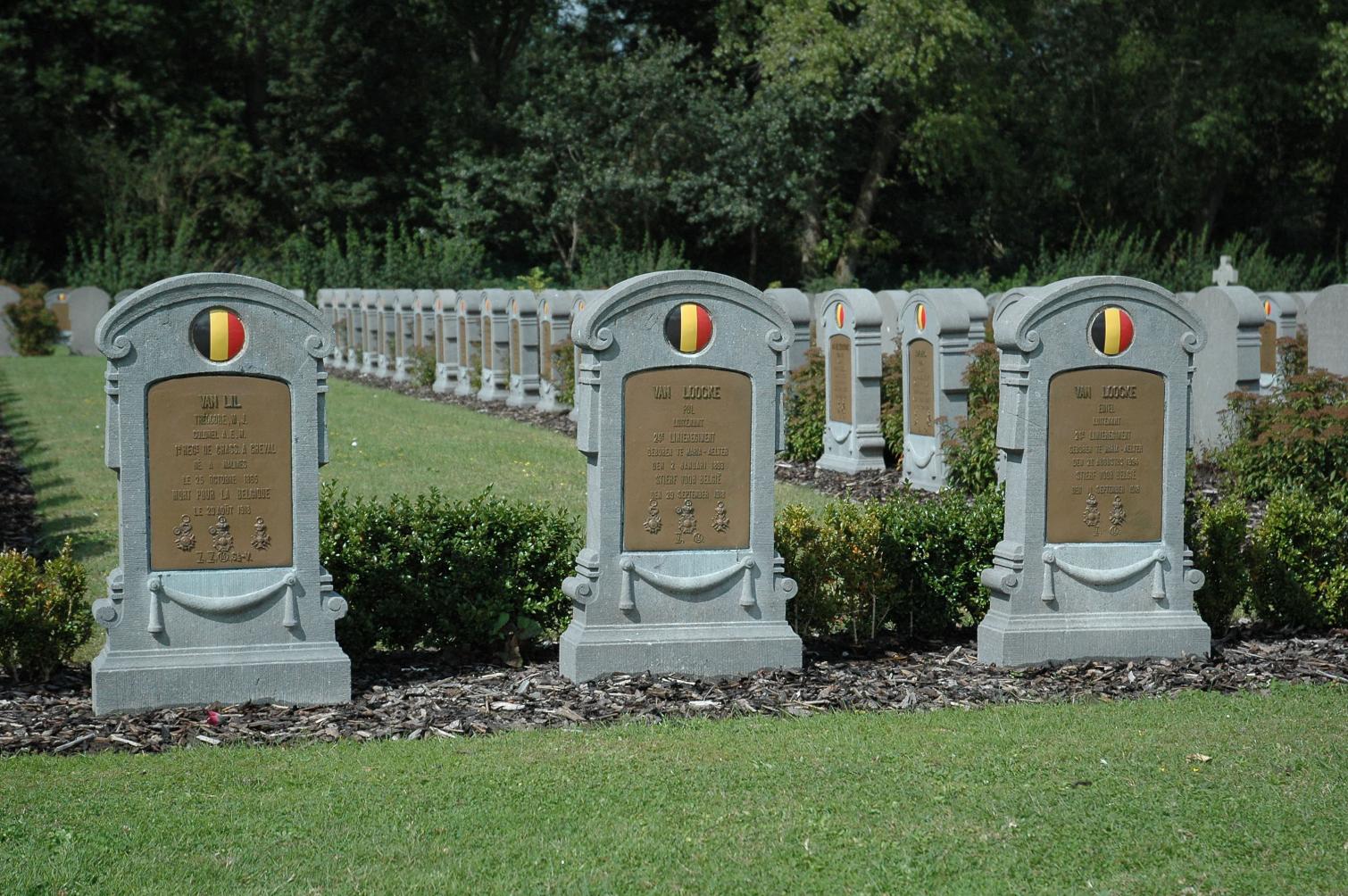
Today, De Panne military cemetery counts 3,739 headstones. There are 3,366 headstones for Belgian victims of the First World War. Under 136 of these stones, no one is buried, and under 811 headstones, the dead could not be identified. There are also 36 French victims of WWI, three of whom could not be identified. Finally, there are 342 Belgian victims from WWII, 42 of whom could not be identified.
In the municipal cemetery, there is still a flowerbed with the dead of the Commonwealth from World War II, as well as a flowerbed with Belgian veterans. There are also some British graves from WWI among the civilian graves.
How to get there?
How much does it cost?
Great news, admission is free!
When is it open?
From sunrise to sunset
Contact us
