


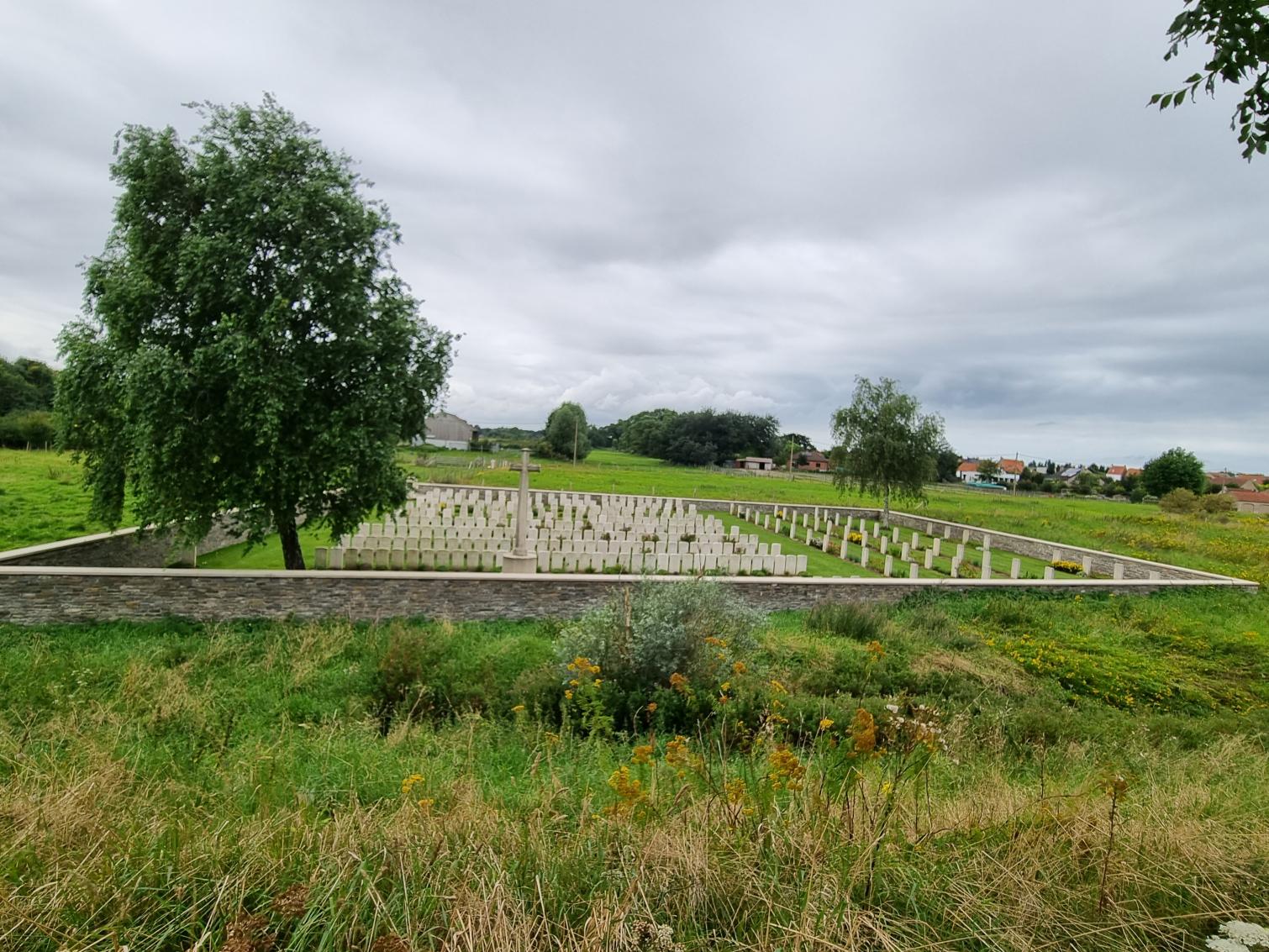
In the Kromfortstraat, near the large roundabout in Adinkerke, you will find the British military cemetery. A final resting place for 168 British soldiers killed during WWI. 52 British soldiers, three British airmen, 40 Czech and Slovakian soldiers and an Egyptian, killed during WWII, are buried here.
Photo gallery


Cimetery
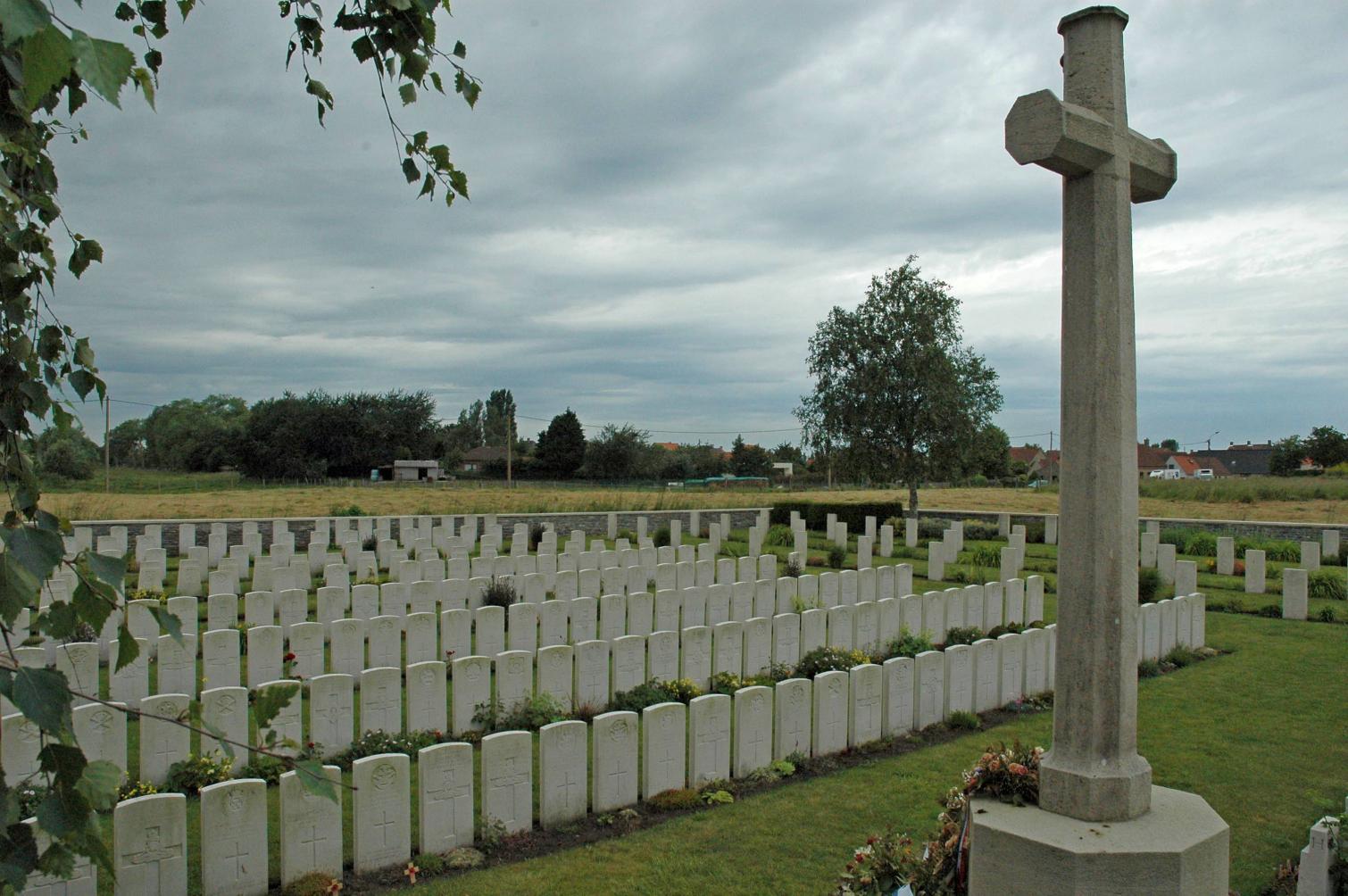
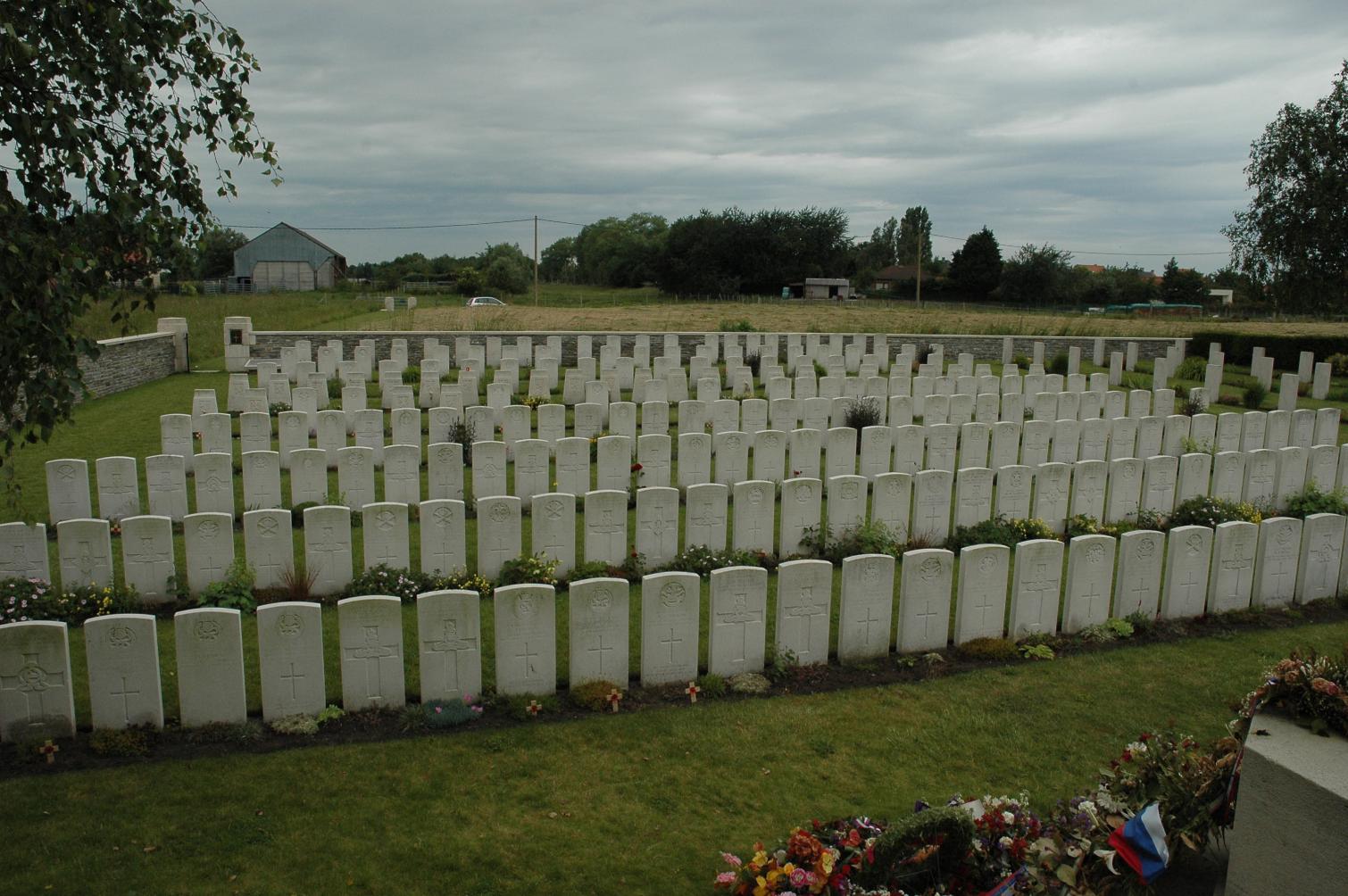
The cemetery covers an area of 1,144 m² and is enclosed by a low wall. British cemeteries, however small, are characterised by the same basic concept that was already established in early 1918. One of the views on the design is that such a cemetery is not a churchyard or a municipal cemetery, but a monument. So it is not only laid out as recognition, but even more as veneration. All the tombstones bear the same chiselled information. There is no distinction in rank and everyone has the same headstone: white Portland stone from chalk quarries in the south of England.
Op elke Britse begraafplaats staat een wit stenen kruis met daarop een bronzen zwaard, het 'cross of sacrifice'. Op de grotere begraafplaatsen staat een soort altaar, de 'stone of remembrance'. Op die steen is overal dezelfde zin gebeiteld: 'Their name liveth for evermore' (Moge hun namen voor eeuwig blijven voortleven). Aan de ingang van elke begraafplaats zit een nis in de muur, gesloten door een zwart metalen deurtje. In dit kastje vinden we meestal twee boeken: de 'history' van de begraafplaats en het bezoekersregister.
In every British cemetery there is a white stone cross with a bronze sword on it, the 'cross of sacrifice'. In the larger cemeteries, there is a kind of altar, the 'stone of remembrance'. The same sentence is chiselled on that stone everywhere: ‘Their name liveth for evermore'. At the entrance to each cemetery is a niche in the wall, closed by a small black metal door. In this cabinet we usually find two books: the 'history' of the cemetery and the visitors' registry.
British cemeteries look colourful, just like the parks in England. They are not gloomy cemeteries at all; they are bright and hopeful, open to the sky. All 156 British cemeteries in West Flanders are managed by the Commonwealth War Graves Commission in Ieper. The site is actually British soil, ceded by Belgium.
Ceremony
Since 1970, a ceremony in memory of the Czechs and Slovaks who lost their lives here during the Second World War has been held every year in May.
How to get there?
How much does it cost?
Great news, admission is free!
When is it open?
From sunrise to sunset
Contact us
