


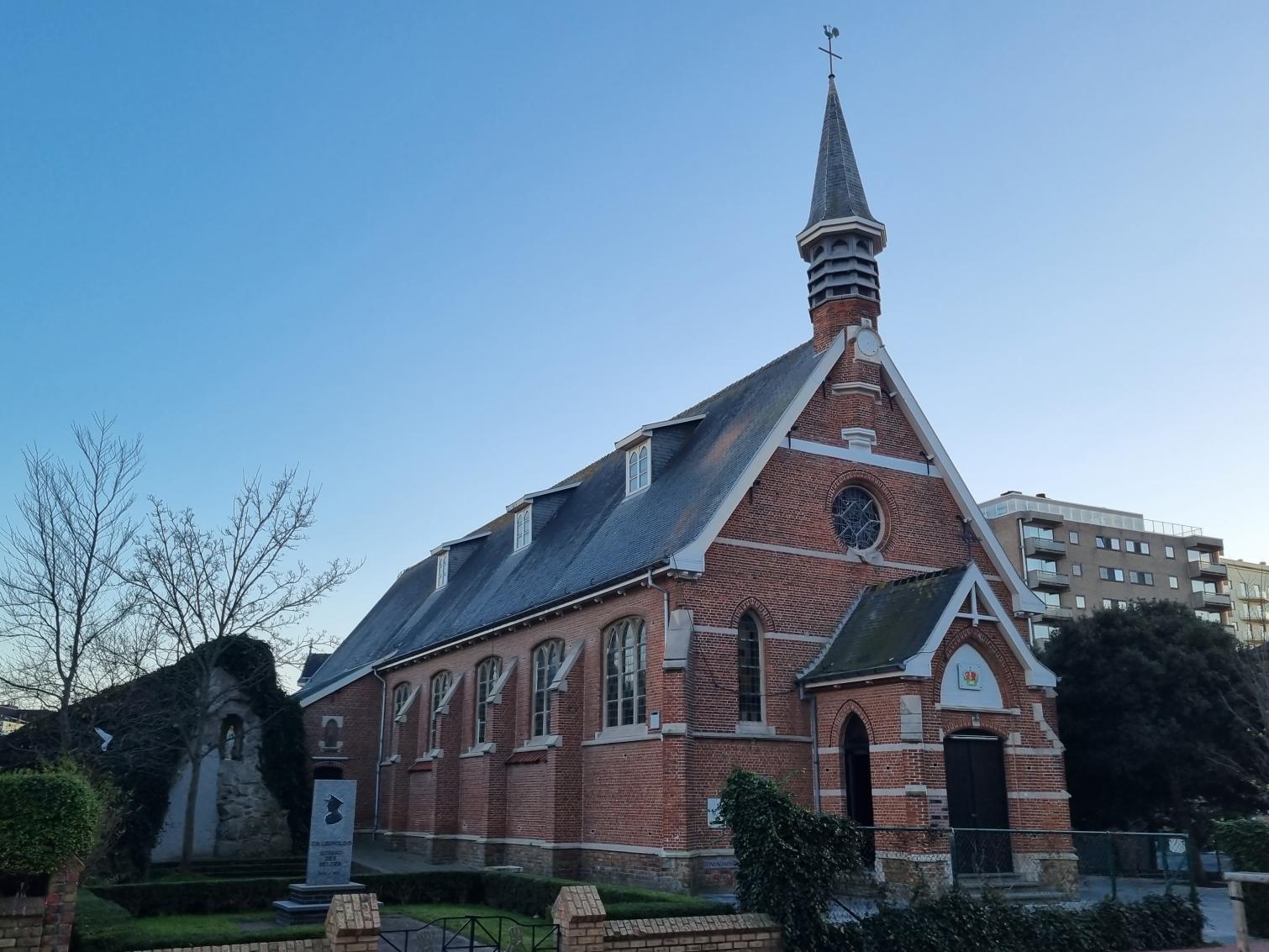
Hidden between the apartment buildings, you will find the 'Paterskerk' of De Panne. This chapel was once located in the middle of the dunes. It was built in 1906 for the tourists and has great historical value.
Photo gallery
History
The chapel with monastery, also called 't Paterskerkje', was built in 1906-1908 by contractor Remi Follet on behalf of the Oblaten Missionaries, who settled in De Panne in 1906 under the impetus of Alice de Aguilar, wife of Ernest d'Arripe. Initially, the fathers took up residence in a former inn, located at today's Leopold I Esplanade. During the First World War, King Albert I and his family attended masses here, which gave the chapel its name: the ‘Koninklijke Kapel’ (Royal Chapel). A commemorative plaque reminds us of this fact.
Architecture
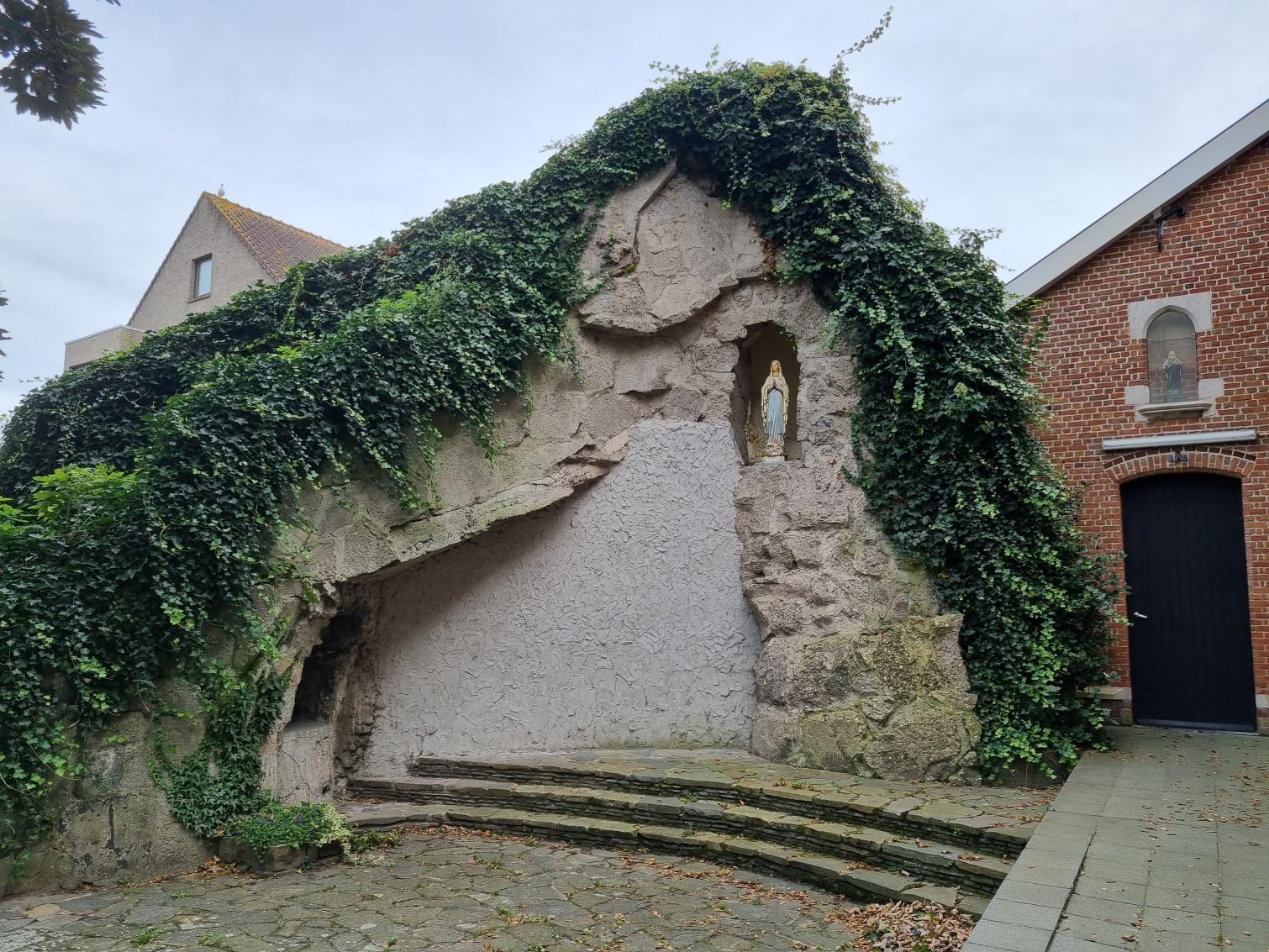
The neo-Gothic chapel was built first and then the monastery. The building consists of a brick neo-Gothic hall church with eight bays under a pitched roof, buttresses and an entrance portal. Above the entrance door, there is a tympanum with the image of the Belgian crown. In 1913, a choir was added to the existing building. Around 1925, a Lourdes grotto was built next to the chapel.
Interior
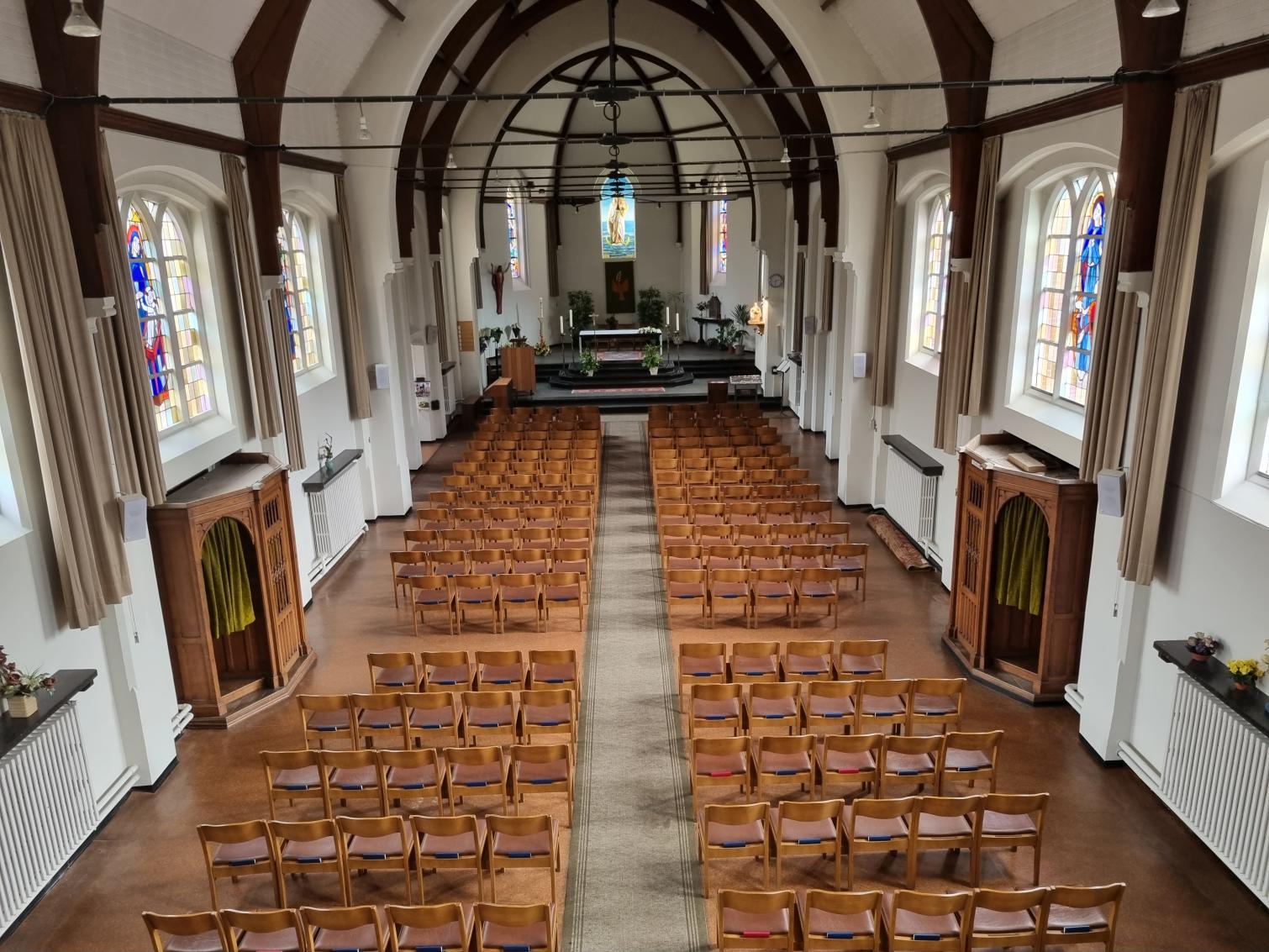
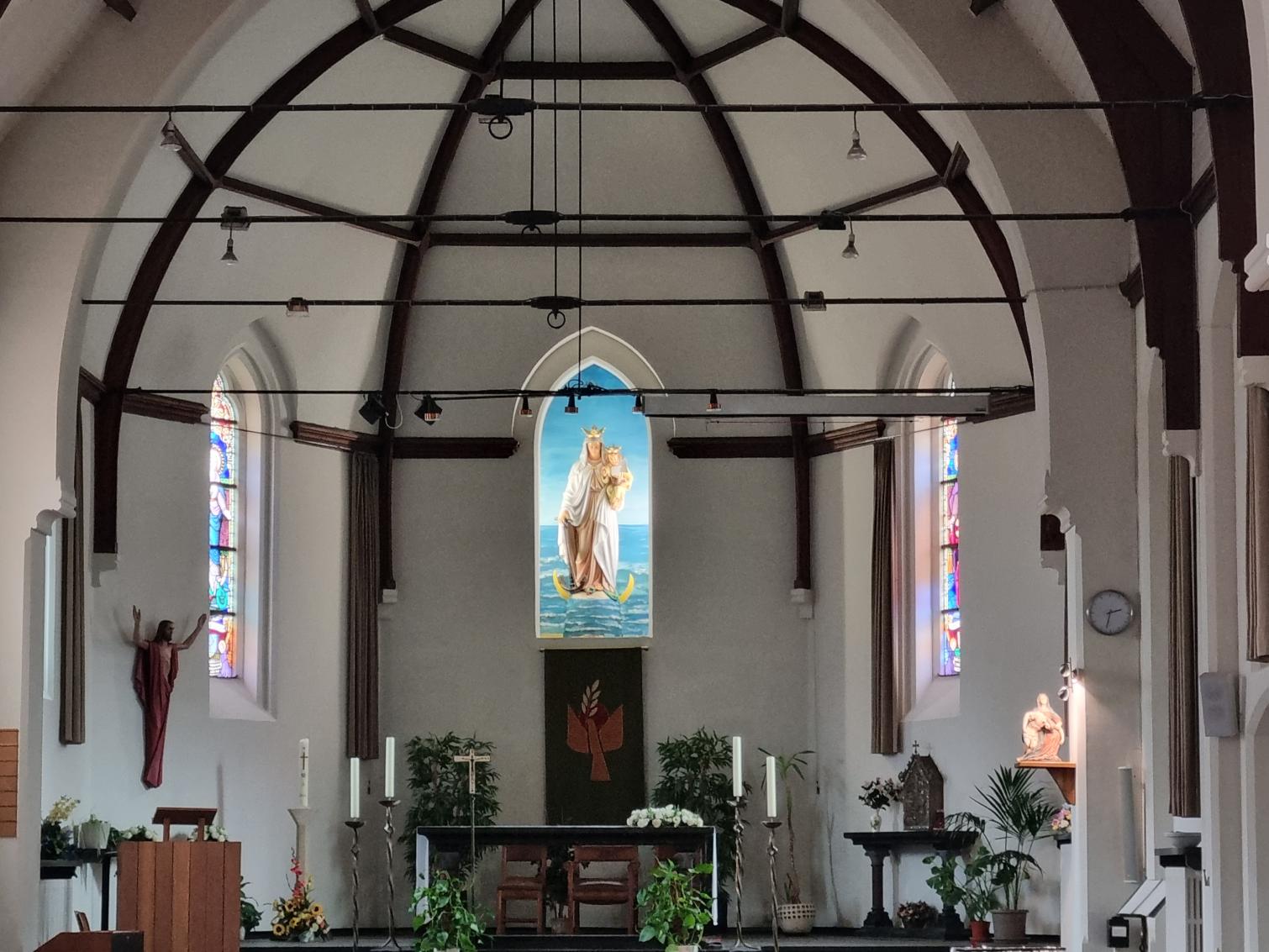
Originally, the church interior was polychromed and richly furnished with neo-Gothic furniture. Because of the limited width of the nave and its Gothic character, we get a strong impression of length and height inside.
In 1931, stained glass windows with the patron saints of the royal family were installed in the chapel, but during the Second World War, these were heavily damaged and never replaced.
How to get there?
How much does it cost?
Great news, admission is free!
When is it open?
From 09.00h to 17.00h
Contact us
Practical information
